How to Track Your Hearing Health Changes Over Multiple Years
Living in Upstate South Carolina for several years means you’ve

By: admin | October 27, 2026
Living in Upstate South Carolina for several years means you’ve probably seen familiar roads take new routes or watched businesses open in places you remember differently.
You probably remember some of those places as they used to be, even if you can’t recall exactly when they changed. An old photograph might remind you of a building or business that’s been gone for years.
Your hearing has a history, too, and it’s something you can follow over time. A test from several years ago captures how you heard at that time.
When you have results from different points in your life, there’s more to consider than how your hearing is doing today. What might those records tell you about the years in between?
Inside your inner ear are thousands of tiny hair cells that respond to sound and send signals to your brain.
Some wear down with age, making higher-pitched sounds harder to hear, including parts of speech that distinguish certain words. Once damaged, these cells don’t grow back.
Years spent around machinery or listening to loud music may also leave their mark on your hearing. Repeated noise exposure can cause damage that doesn’t become apparent until much later.
You might notice difficulties with certain sounds years after the exposure occurred. Your health history deserves consideration, too.
Diabetes and high blood pressure have been linked to hearing loss, while certain medications can damage the inner ear. These effects vary between individuals.
Living in Upstate South Carolina means spending time around all kinds of sounds, from yard work on a Saturday morning to outdoor concerts and community events.
Some activities involve louder noise than you might realize, especially when you’ve been around it for years. How often you’re exposed and how long the noise lasts both matter.
Here are a few common sources of noise to consider:
More attention goes toward figuring out the conversation instead of simply following along. The extra mental effort is known as cognitive load.
With untreated hearing loss, listening may require more concentration than it used to. You might remember the general subject of a conversation but struggle to recall details afterward.
Spending hours concentrating on speech can leave you mentally tired, even when you’ve understood most of what was said. By evening, you may find it harder to concentrate or prefer some quiet after being around people.
If your parents or siblings have hearing loss, their experiences may be quite different from yours. The age when hearing difficulties first appear can vary, even among members of the same family.
Inherited differences can affect how the inner ear works and how sensitive it is to damage. Having relatives with hearing loss doesn’t necessarily mean you’ll develop it yourself.
Childhood illnesses can leave lasting effects on your hearing, too. Repeated middle ear infections sometimes damage the eardrum or the small bones that carry sound through the ear.
Meningitis and measles can also cause permanent hearing loss, even after the illness has passed. Previous ear surgery or complications from an infection may explain findings on a hearing test many years later.
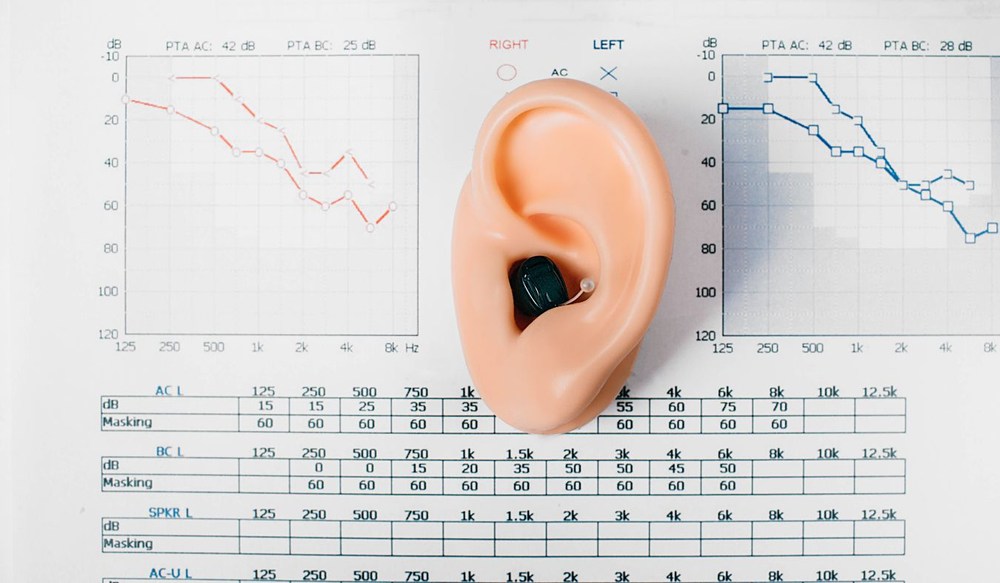
During a professional hearing test, your audiologist checks how softly you can hear sounds at different pitches. The results go on a chart called an audiogram.
Frequencies are measured in hertz (Hz) and tell you whether a sound is low or high in pitch. Decibels (dBs) show how loud each sound needs to be before you hear it.
Your audiologist tests each ear separately, since your hearing may not be identical on both sides. The first test gives you something to compare with results from later years.
Your audiologist can look at whether certain pitches have become harder to hear or stayed much the same.
For example, you might still hear lower-pitched sounds well but need more volume to hear higher ones. Those differences show up on an audiogram, even when you haven’t noticed much change in conversations.
At a restaurant, you might follow the person across from you until nearby tables get busy. Voices begin to overlap, and certain words become harder to tell apart.
Higher-pitched consonants, like s and f, are often among the first speech sounds affected by high-frequency hearing loss. Someone may be speaking loudly enough for you to hear them, but parts of their words still get lost.
Ringing or buzzing in your ears is another change you might experience. Tinnitus can sound like a whistle, hum or hiss and it doesn’t always stay at the same volume.
You might hear it for a few minutes or find that it lasts much longer. Although tinnitus sometimes occurs with high-frequency hearing loss, it can also happen when hearing tests show normal results.
You probably hear the same household sounds so often that you rarely think about them. Checking in on a few familiar sounds now and then gives you something to compare over time.
Keep a notebook or use your phone to jot down anything that seems different. Here are a few things to check:
Friends may wonder why you’re quieter than usual, especially if you used to join in more often. They may not realize you’ve been having trouble following the conversation.
A conversation with someone close to you doesn’t need to cover everything at once. You might mention that you’ve been losing track of conversations and ask whether they’ve noticed you responding differently.
Rather than simply saying you’re having trouble hearing, explain what happens when someone speaks while facing away from you. Hearing their perspective may also bring up experiences you hadn’t considered, including moments when they thought you were ignoring them.
Hearing test results are easy to misplace when years pass between appointments. Keep your audiograms in a folder or save digital copies where you store other health records.
Keep copies of any recommendations from your audiologist and note when changes were made to your care plan. If you see a different audiologist later, you can bring those records to your appointment.
Before leaving each visit, ask when your next test should be scheduled. Some people return annually, while others follow a different schedule based on their hearing history.
Put a reminder on your calendar so another year doesn’t pass without checking. If something changes before then, there’s no reason to wait for your scheduled visit.
You might go several years without thinking much about your hearing, especially when conversations and familiar sounds seem much the same. Still, it’s interesting to look back and see what your hearing was like at different ages.
Some test results may show very little difference, while others might explain something you’ve experienced recently. You don’t have to figure out what every change means on your own.
At Davis Audiology, we’re interested in what you’ve experienced between visits, not just how you perform during a hearing test.
Whether you’re coming in for the first time or returning after several years, we’ll discuss your results and any concerns you have. Call us at (864) 810-6238 to schedule an appointment at any of our South Carolina offices in Greenville, Simpsonville or Spartanburg.
Living in Upstate South Carolina for several years means you’ve
By: admin | October 27, 2026

A summer night at Fluor Field watching the Drive play, fireworks going off
By: Kristin Davis, Au.D. | August 24, 2026

Traveling somewhere with a different climate can be an adjustment for your
By: Kristin Davis, Au.D. | May 18, 2026